14 August 2026
Recipe Serving Sizes for Real Household Meals
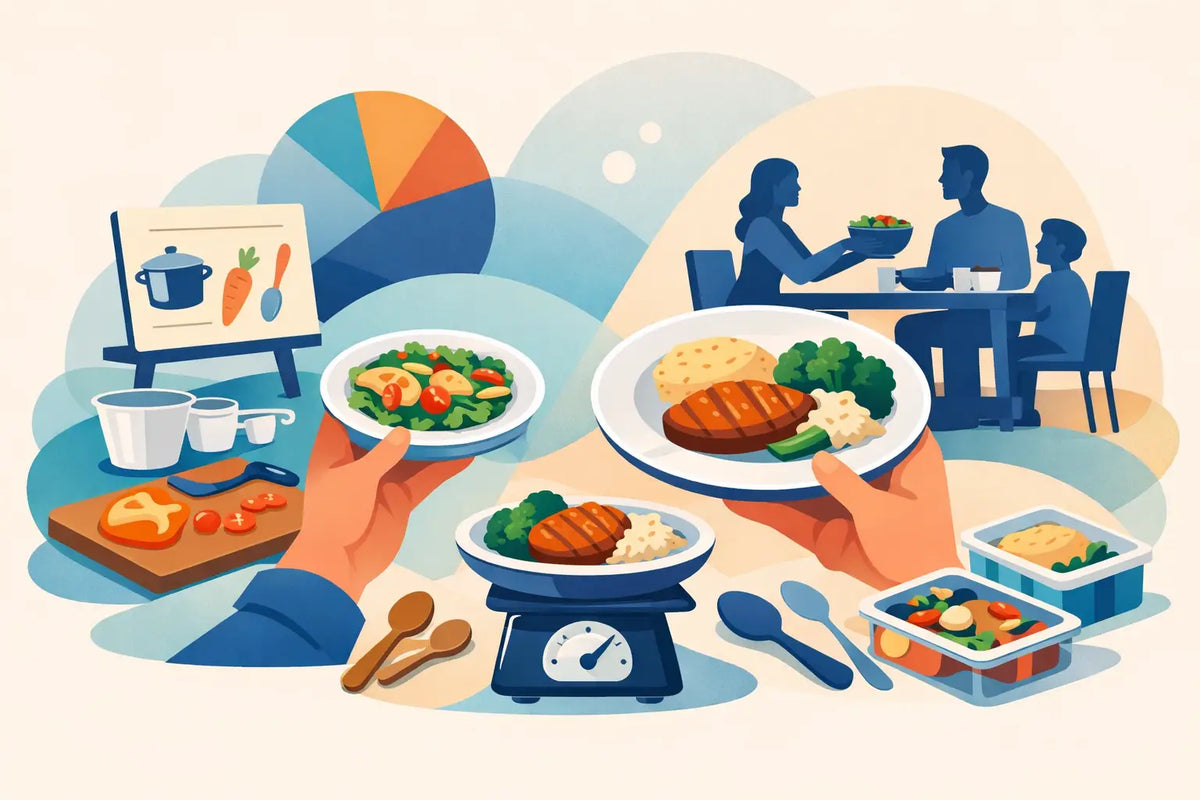
A recipe that says it serves four can mean four generous bowls, four small side portions, or four people who will be looking for snacks an hour later. Recipe serving sizes are not a minor detail. They determine how much you cook, what lands on the grocery list, what nutrition numbers mean, and whether leftovers become tomorrow’s lunch or another container lost in the back of the fridge.
The goal is not to follow a recipe’s stated yield blindly. The goal is to build portions that match your household. Once serving sizes reflect how you actually eat, meal planning gets calmer. The grocery list is more accurate. Food waste drops. Dinner is more likely to be enough.
Start With the Meal, Not the Number on the Recipe
A serving is not a fixed unit. It depends on who is eating, what else is on the table, and what the meal needs to do that day.
Four servings of chili may be right for two adults and two young children when served with cornbread, fruit, and a salad. The same pot may only cover two hungry adults after a long workout. A pasta recipe labeled as six servings can become four dinners if pasta is the main event, but stretch to six if it sits beside chicken and vegetables.
Before you scale anything, decide what kind of meal you are planning. Is it a main dish, a side, a packed lunch, or a meal with intentional leftovers? That answer is more useful than the number printed at the top of a recipe.
A practical household serving plan often includes three groups: adults with standard appetites, people who usually need larger portions, and children or lighter eaters. You do not need to make separate meals for everyone. You only need to stop pretending everyone eats the same amount.
Set Recipe Serving Sizes Using a Household Baseline
Choose a simple baseline for the meals you cook repeatedly. Think in portions you can recognize at the table rather than strict calorie targets.
For a main meal, one adult portion might be a full bowl of soup, two tacos, a chicken breast with sides, or about one-quarter of a casserole. A larger appetite may be one and a half portions. A small child may be one-half portion, depending on age and the meal. These are planning estimates, not rules.
The most useful approach is to record what happened after dinner. Did everyone eat? Was there enough for lunch? Did you have one small portion left that nobody wanted? After cooking a recipe twice, you will have better information than its original serving label can provide.
For example, a lasagna recipe listed as eight servings may consistently feed your household of two adults and two children for dinner plus two lunch portions. In your kitchen, it is not an eight-serving recipe. It is six meaningful portions. Save it that way.
This matters most for recipes with vague yields. A large pot, sheet pan, or baking dish can look abundant before serving and disappear quickly at the table. Give the finished recipe a realistic household yield after you have cooked it. That one adjustment improves every future grocery list.
Treat leftovers as planned servings
Leftovers are not an accident. They are servings with a job.
If Tuesday dinner needs to provide two Wednesday lunches, include those lunches in the recipe yield before you shop. A meal for four people plus two lunch portions is a six-serving plan, even if only four people sit down for dinner.
This is especially helpful for expensive proteins, batch-cooked grains, soups, and casseroles. It prevents the familiar problem of cooking enough for tonight, then buying lunch tomorrow because there was not quite enough left.
There is a trade-off. Not every meal holds well, and not everyone enjoys repeats. Crispy foods, dressed salads, and delicate seafood are usually better planned close to their cooking day. Chili, grain bowls, roasted vegetables, curries, and braises often earn their place as planned leftovers.
Scale Ingredients Before You Shop
Once you know the needed yield, scaling is straightforward. Divide the servings you need by the servings the recipe makes. Then multiply each ingredient by that result.
If a recipe makes four servings and you need six, the scaling factor is 1.5. Two cups of rice become three cups. One pound of ground turkey becomes one and a half pounds. If you only need two portions from a four-serving recipe, use a 0.5 factor.
The math is simple. Real ingredients make it less exact.
Packaged foods often force a sensible rounding decision. You may need 1.5 pounds of chicken but only find one-pound packages. Buy two pounds if the extra can become another meal, go into the freezer, or cover larger appetites. Buy the closer amount from the meat counter when possible. Planning is not about mathematical perfection. It is about avoiding short meals and unnecessary waste.
Seasonings need judgment too. Doubling a soup does not always mean doubling every spice. Start with roughly one and a half times the salt, hot pepper, or dried herbs for a doubled recipe, then taste as it cooks. Aromatics such as onions and garlic are more forgiving, but even those can overpower a smaller batch.
Baking is the exception. Cakes, breads, and pastries rely on ratios and pan size. Halving a dinner recipe is usually easy. Halving a cake may change baking time, texture, and how the batter fills the pan. When the result matters for an event, use a recipe written for the batch size you need.
Make Nutrition Totals Match the Portion You Serve
Nutrition tracking becomes misleading when the recipe yield is wrong. A recipe may show 450 calories per serving because the creator divided it into six portions. If you divide the finished dish into four portions, each plate contains more than the listed amount. The ingredients did not change. The serving size did.
This is not a reason to obsess over every gram. It is a reason to make the numbers useful.
Start with the total ingredients used, including cooking oils, sauces, toppings, and pantry staples that add meaningful calories, sodium, or allergens. Then divide the full recipe by the number of portions you actually intend to serve. If one person eats a larger portion, count it as one and a half servings rather than pretending every plate was identical.
For family meals, consistency is more valuable than precision theater. If you use the same portion logic each week, trends become easier to see. You can tell whether lunches are protein-light, whether dinners are meeting your fiber goal, or whether a recipe is heavier than it appears.
Allergy flags deserve the same discipline. A recipe that serves six is still a problem for one person with an allergen. Record substitutions at the ingredient level and label the finished meal clearly. Portion scaling does not remove allergy risk. It can make hidden ingredients easier to overlook when recipes are combined, doubled, or adapted.
Build a System You Can Repeat
The best recipe serving sizes are the ones you do not have to recalculate every Sunday. Save the corrected yield after cooking. Save the version with the right package quantities. Save whether it provides lunch leftovers or only dinner. Over time, each recipe becomes a reliable household tool instead of a fresh calculation.
A meal planning system should make that record useful. In LARDER, you can set a recipe yield, scale it for the week, and let the adjusted ingredients flow into a grocery list while nutrition is calculated from the ingredients you use. It works locally in your browser, with no account, no tracking, and no monthly fee.
But the system is only as good as the decisions behind it. Give recipes the serving sizes your household has proven, not the serving sizes someone else typed into a blog post years ago.
A Quick Check Before You Cook
Before adding a recipe to the week, ask a few practical questions. How many people will eat it? Will anyone want a larger portion? Does it need to cover lunch tomorrow? Are there sides that make the main dish go further? Do the package sizes leave a useful extra amount or an awkward partial ingredient?
These questions take less than a minute. They prevent the two outcomes that make meal planning feel unreliable: not enough food, or too much food with no plan for it.
Good portion planning does not require a perfect spreadsheet or strict serving rules. It requires a clear picture of your household, a willingness to adjust after dinner, and a record of what worked. Cook once. Learn once. Let the next week run more smoothly.