05 August 2026
Weekly Meal Planning That Actually Sticks
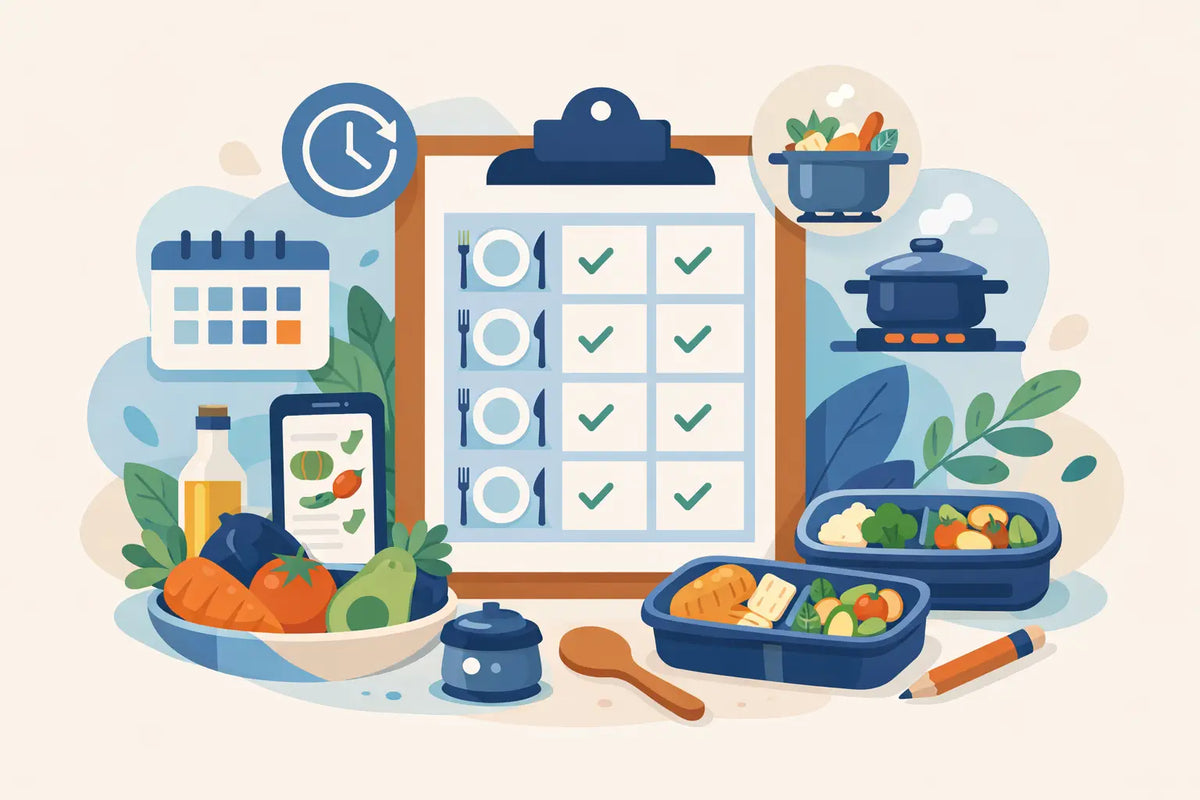
At 5:30 p.m., the hardest part of dinner is often not cooking. It is deciding what to make, checking what you have, and realizing one missing ingredient has changed the plan. Weekly meal planning removes that daily negotiation. You make a few decisions once, then let the rest of the week follow a clear system.
A useful plan is not a color-coded fantasy menu that collapses on Wednesday. It is a practical view of your real week: late meetings, practice nights, leftovers, grocery budget, pantry staples, and the meals people will actually eat. Dinner, decided.
Start Weekly Meal Planning With Your Actual Week
Open your calendar before opening a recipe app. The schedule determines the menu, not the other way around. A week with three late evenings needs fast meals, leftovers, or freezer options. A quiet Sunday may be the right time for a recipe that creates lunches for two days.
Mark the nights that need the least effort first. These can be a familiar pasta, breakfast for dinner, rotisserie chicken, freezer chili, or leftovers. Then place one or two meals that require more preparation on the days when you have time and energy.
This approach is less exciting than choosing seven new recipes. It works better. Most households do not need novelty every night. They need a plan that survives a busy Tuesday.
Leave one meal unassigned if your week is unpredictable. That open slot gives you room for takeout, a changed schedule, extra leftovers, or an ingredient that needs to be used before it expires. Flexibility is not a failure in the plan. It is part of the plan.
Build a Small Rotation Before Adding Variety
The fastest way to make planning easier is to stop starting from zero. Keep a reliable rotation of meals your household likes and you can cook without checking five tabs. Think tacos, grain bowls, sheet-pan chicken, stir-fry, soup, sandwiches, baked potatoes, or whatever earns repeat requests at your table.
A good starting rotation has enough range to prevent boredom, but not so much that shopping becomes complicated. Aim for meals that share ingredients. If Monday uses spinach, Tuesday can use the rest in eggs, wraps, or a grain bowl. If one recipe calls for cilantro, plan another way to use it before it becomes drawer compost.
This is where weekly meal planning starts saving money as well as time. Buying ingredients for isolated recipes creates partial packages and forgotten produce. Building around overlap creates a shorter, more intentional grocery list.
Variety still has a place. Add one new recipe when you want to, not because the plan demands it. Test it on a lower-pressure night. If it becomes a favorite, add it to your rotation. If it does not, you have learned something without disrupting the entire week.
Plan From the Pantry First
Your pantry, refrigerator, and freezer are part of the grocery store you have already paid for. Check them before making a list. Look for ingredients that are close to expiration, opened packages that need a second use, and freezer meals you have forgotten.
Start with a simple question: what needs to be used first? A bag of greens, half a carton of broth, ground meat in the freezer, ripe bananas, or a jar of sauce can become the anchor for a meal. Then fill in only what is missing.
This habit also prevents duplicate purchases. There is no value in buying another box of pasta or another bottle of olive oil because the pantry was not visible when you planned. A current inventory gives the grocery list context.
If tracking every item feels excessive, do not. Inventory systems should fit the household. You may only need to track higher-cost staples, freezer items, expiration dates, and ingredients that are easy to forget. The goal is useful awareness, not a second job.
Turn the Menu Into One Grocery List
A meal plan is only useful when it becomes a shopping list you can trust. Write down every ingredient required for the meals you selected, then subtract what is already on hand. Combine duplicates before you shop.
For example, two recipes may each call for half an onion, but your list should say one onion. Three meals may use chicken, but the total quantity matters more than three separate reminders. This sounds obvious, yet it is where paper notes, saved recipes, and mental math often break down.
Organize the final list in the order you shop: produce, meat and dairy, pantry, frozen, and household items. That small structure reduces backtracking and makes it easier to see whether you are buying food for a plan or adding items out of habit.
Price matters too. Store preferences and a personal price history can help you choose between brands, package sizes, and stores without guessing. The lowest sticker price is not always the best value, especially when a larger package will spoil before you use it. Buy the amount your plan can realistically absorb.
Give Each Meal a Backup
Even a well-built plan meets real life. Someone gets home late. A child rejects the dinner they asked for yesterday. You forget to thaw the protein. The answer is not abandoning the plan. It is keeping low-effort backups available.
Backups can be simple: eggs, canned beans, pasta, frozen vegetables, tortillas, soup, or a ready-to-heat freezer meal. They are not glamorous, but they protect the grocery budget and prevent the familiar question of what to order instead.
Think of backups as pressure relief. They make the system reliable because every planned meal does not need to happen exactly as written. Move Tuesday's dinner to Thursday. Eat leftovers on Wednesday. Use the backup tonight. The weekly plan remains useful because it can adapt.
Make Nutrition Part of the Same Decision
For many households, nutrition tracking becomes difficult because it lives somewhere separate from meal planning. Recipes are in one place, grocery notes are in another, and nutrition details are checked only after cooking. That creates extra work at the moment you have the least patience for it.
It is more practical to see nutrition while choosing meals. Ingredient-based calculations can show how a recipe fits your needs before it reaches the table. Serving scaling helps when cooking for one, two, or a family. Allergy flags make it easier to spot problems before shopping or serving.
The right level of detail depends on your goal. If you are managing a medical requirement, precise ingredients and servings matter. If you simply want more balanced weekdays, a quick view of protein, fiber, and overall variety may be enough. Planning should provide clarity, not turn dinner into accounting.
Use a Weekly Reset, Not a Perfect Routine
Choose one repeatable time to plan. For some households, it is Friday afternoon before a Saturday grocery trip. For others, Sunday evening works best. The exact day does not matter. The repeat matters because it stops the plan from becoming a decision you must remember from scratch every week.
A workable reset takes four steps: look at the calendar, check food on hand, place meals on the days, and generate the list. Keep it short. If the process takes an hour, simplify the recipe rotation or reduce the number of new meals.
A private, offline workspace can make this routine easier to keep. LARDER brings scheduling, recipes, grocery lists, pantry records, expiration dates, nutrition, and price notes into one browser-based file. No account. No internet connection. No monthly fee. Your household data stays with you, and you can back it up when you choose.
That control matters because meal planning is personal. Your recipes, food preferences, allergies, shopping habits, and budgets do not need to become another cloud profile. A durable system should still work when the internet is down, a service changes its pricing, or you simply want fewer accounts to manage.
Review What Happened, Then Adjust
At the end of the week, do not judge the plan by whether every meal happened on its assigned day. Judge it by whether it reduced stress, prevented waste, and made shopping easier.
Notice what was skipped and why. Maybe the recipe took too long. Maybe you bought too much produce. Maybe leftovers covered more meals than expected. Those observations are the information that improves next week's plan.
Keep the meals that worked. Remove friction from the ones that did not. Over time, your plan becomes a record of how your household actually eats, not how you think it should eat. That is the point: a quiet system that gives you fewer decisions, less waste, and one less thing to solve when dinner is close.