18 August 2026
A Freezer Inventory System That Gets Used
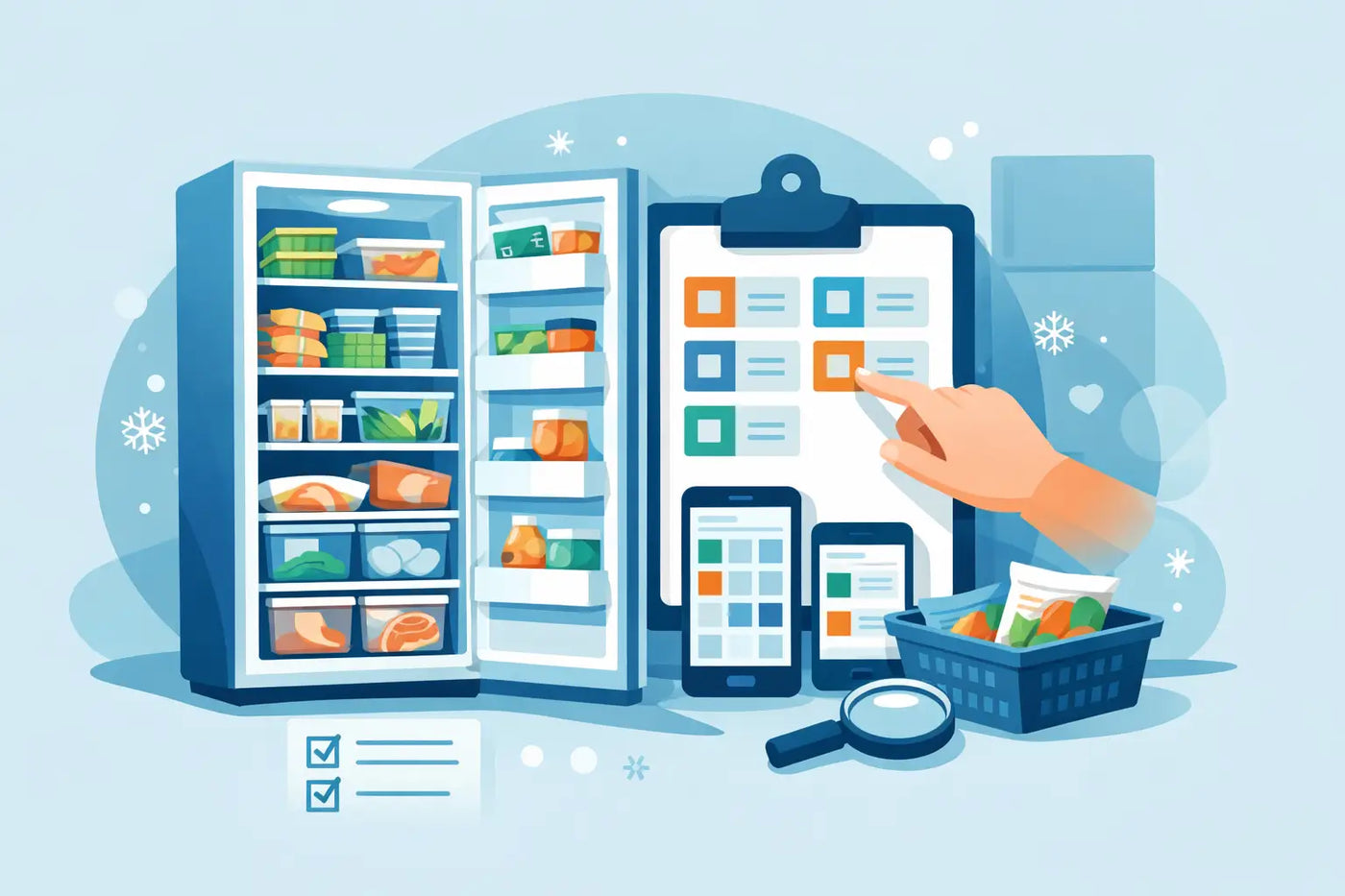
That bag of chicken at the back of the freezer is not a mystery because you forgot to label it. It is a mystery because your system asked too much of you. A useful freezer inventory system has one job: tell you what you can cook before you buy more food.
The goal is not a perfectly documented freezer. The goal is fewer duplicate purchases, fewer expired leftovers, and less time standing in front of an open door trying to decide dinner. Keep it simple enough to maintain after a long grocery run. Keep it visible enough to trust.
What a freezer inventory system should solve
Most households do not need a restaurant-style stock ledger. They need a clear answer to a few ordinary questions: What is in here? What should we use first? What can become dinner this week? And do we already own it?
When those answers are unavailable, the freezer becomes expensive storage. You buy another package of ground beef because you cannot remember the two already buried behind frozen vegetables. You order takeout because ingredients exist, but no one can see the meal they make. Food waste usually starts with lost visibility, not bad intentions.
A good system also separates food safety from food quality. Most properly frozen foods remain safe for a long time when held consistently at 0°F. But texture and flavor decline. Dates still matter because they help you use food while it is at its best, not because every item becomes unusable on a particular day.
Start with a 30-minute reset
Do not build the system around a freezer you have not seen clearly. Start once, then maintain it in small moments.
Take everything out in sections. Group similar items together: proteins, cooked meals, vegetables and fruit, bread, breakfast items, and pantry-style backups such as broth or shredded cheese. Discard anything badly freezer-burned, unidentified, or clearly past the point you would want to serve it.
You do not need to record every ice pop or half-used bag of peas. Track the items that influence meal decisions and grocery spending. That usually means proteins, leftovers, batch-cooked meals, bread, higher-cost ingredients, and anything you are likely to forget.
Before putting food back, create physical zones. A bin for proteins, a bin for prepared meals, and one small front section for use-first items can be enough. If your freezer has drawers, assign each drawer a category. The arrangement does not need to look impressive. It needs to stay understandable when someone else puts groceries away.
Choose the right level of detail
The best freezer inventory system matches the way your household cooks. There are three practical levels.
A short list on the refrigerator works well for small freezers and households that prefer a pencil-and-paper routine. Write broad quantities, such as “chicken thighs - 2 packs” or “chili - 4 servings.” Cross items off when they are used. It is fast, but it can become inaccurate if more than one person handles food.
A notes app or simple spreadsheet gives you search, sorting, and a history of changes. This is useful if you buy in bulk, rotate through many freezer meals, or manage dietary needs. The trade-off is friction. If logging an item takes several steps, the list will fall behind.
An integrated household planner is often the most practical middle ground. When freezer items sit beside recipes, a weekly plan, grocery needs, and pantry quantities, inventory becomes useful at the point of decision. LARDER is designed for this kind of local workflow: one browser-based file, no account, no internet connection, and data stored under your control.
Whatever tool you choose, use it from the same place every time. A system split among sticky notes, a family text thread, and a half-finished spreadsheet will create more uncertainty, not less.
The fields worth tracking
For most food, four details are enough:
- Item name and cut or flavor, such as “salmon fillets” rather than just “fish”
- Quantity in a useful unit, such as 2 pounds, 6 portions, or 1 casserole
- Date frozen or purchased
- Location, if you have a chest freezer, garage freezer, or several drawers
Avoid tracking tiny details that do not affect a decision. Brand names, package prices, and exact shelf positions may matter to some households, but they are not required. Precision is valuable only if you maintain it.
Make the update happen at the right moments
Inventory fails when it becomes a separate chore. Attach updates to actions you already take.
When groceries come home, enter major freezer items before they disappear into a drawer. When you batch-cook soup, chili, or breakfast burritos, record the number of servings as you portion them. When you thaw or cook something, remove it from the inventory then, not after dinner.
This takes seconds when the categories and units are consistent. “Chicken breast - 4 portions” is easier to act on than “large Costco chicken package.” Choose quantities that match your cooking decisions. If you plan dinners by servings, track servings. If you cook by weight, track pounds.
A weekly review closes the loop. Before writing the grocery list, look at food that has been frozen longest and choose one or two meals around it. This is where an inventory stops being a record and starts saving money.
Use the freezer to plan dinner, not delay it
The strongest habit is a use-first meal each week. It does not need to be complicated. Frozen turkey becomes tacos. A container of tomato sauce becomes pasta night. Rotisserie chicken portions become soup, quesadillas, or grain bowls.
Start with the protein or prepared meal closest to its quality limit. Then build the rest of the plan around ingredients you already have. If one missing item makes the meal work, add it to the grocery list. That is a better purchase than buying a new main ingredient while older food waits.
This approach is especially helpful during busy weeks. Your freezer becomes a bank of decisions already made: portions you cooked earlier, ingredients bought on sale, and meals available when plans change. It is not just emergency storage.
Prevent the common failure points
The first failure point is overbuilding. A detailed system may feel satisfying on day one, then disappear by week three. Begin with 15 to 30 high-value items. Expand only if you consistently keep up.
The second is vague labeling. Every homemade item should have a name, date, and portion count. “Leftovers” is not a meal plan. “Chicken tortilla soup - 3 servings - Feb. 12” is.
The third is treating the inventory as a private project. If you share a household, make the rules obvious. Put new food in the assigned zone. Mark food used. Place older items in the use-first area. A system that only works when one person is home is not a household system.
Finally, do not let an imperfect count stop you from using the list. If you discover that you have three bags of frozen berries instead of two, correct it and move on. Accuracy improves through ordinary use, not through another full audit.
Keep it light, then trust it
A freezer inventory system earns its place when it reduces thought. You should be able to check it, choose a meal, and know what to buy in a minute or two.
Set up the categories once. Label what matters. Review it before shopping. Then let the freezer do what it was meant to do: hold tomorrow's dinner, not tomorrow's uncertainty.