10 August 2026
How to Prevent Duplicate Groceries Every Week
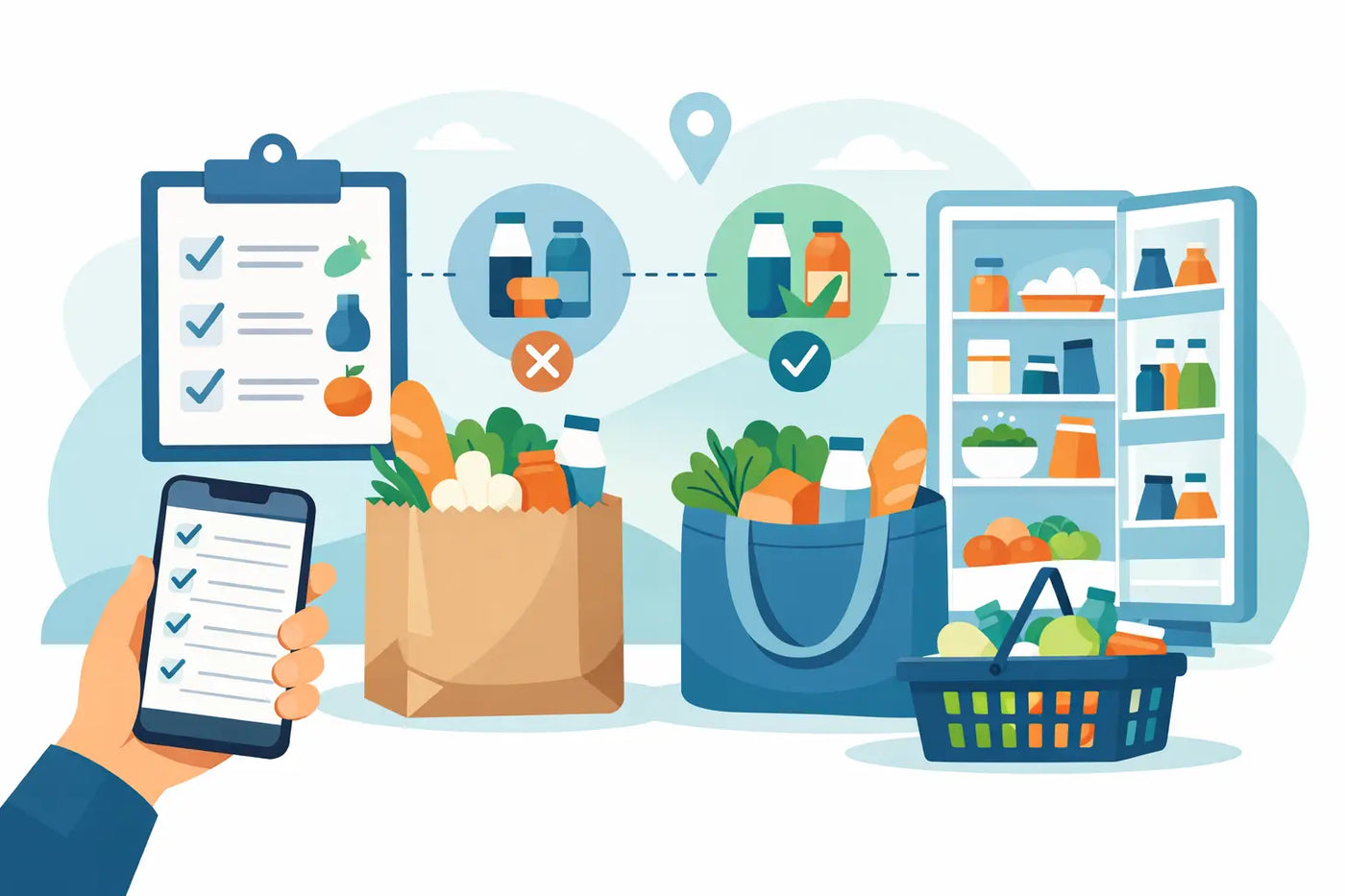
A second bottle of olive oil rarely feels like a big mistake at checkout. Neither does another bag of rice, a third jar of pasta sauce, or yogurt that gets buried behind newer yogurt. But these small repeats add up to a crowded pantry, food that expires unnoticed, and a grocery bill that does not reflect what your household actually needs.
Learning how to prevent duplicate groceries is less about having a better memory. It is about giving every ingredient one reliable place in your routine: a place to see what you have, decide what you will cook, and build a list from what is missing.
Why duplicate groceries keep happening
Duplicate purchases are usually a system problem, not a discipline problem. Groceries move constantly. A box of crackers goes to work. Half an onion goes into the refrigerator. A family member opens the last package without mentioning it. A sale looks useful, so you buy ahead. Then, at the store, uncertainty fills the gaps: “We might be out.”
Most households also plan in the wrong order. They shop first, then decide what to make. That approach leaves every purchase open to guesswork. It also makes it easy to buy ingredients for meals that never make it onto the calendar.
The fix is simple in principle: inventory first, meals second, grocery list last. The details matter because the system must be easy enough to repeat on a busy week.
How to prevent duplicate groceries starts before the store
Do not begin your grocery list from memory. Begin with a quick view of your kitchen. You do not need to count every grain of rice or track every spice. You need a useful working inventory of the foods that affect your next several meals and your spending.
Set a clear home for pantry staples, refrigerator items, freezer foods, and household supplies. The goal is not a picture-perfect kitchen. The goal is visibility. If canned beans are spread across three cabinets, or chicken is hidden under freezer bags, your inventory is already unreliable.
Use simple zones that match how you shop and cook. Keep breakfast foods together, baking items together, canned goods together, and open packages where they can be seen. In the refrigerator, put foods that need to be used soon at eye level. In the freezer, label leftovers and prepared ingredients with the date.
This is also where a small amount of precision pays off. Track the items you buy often, the items that are expensive, and the items that expire quickly. Milk, eggs, proteins, produce, lunch staples, coffee, and household paper goods are common examples. You can estimate the rest.
A pantry count should answer three questions: What is available? What needs using soon? What is actually low? If you cannot answer those in a minute or two, simplify the way items are stored before adding more tracking.
Plan meals around what is already open
The fastest way to use existing groceries is to let them shape the week’s meals. Before choosing new recipes, look at opened packages, ripe produce, leftovers, and ingredients nearing their expiration date.
A partial bag of spinach can become omelets, pasta, grain bowls, or a side dish. Cooked chicken can cover tacos one night and salad lunches the next. An open jar of salsa may be the reason you choose burrito bowls instead of buying ingredients for an entirely different dinner.
This does not mean every meal must be a pantry cleanout. A realistic plan mixes planned favorites with flexible meals. Choose a few recipes your household will reliably eat, then leave room for leftovers, eating out, or a low-effort night. Overplanning can create duplicates too, especially when a seven-day menu assumes you will cook seven elaborate dinners.
Serving size matters. A recipe written for six can create unnecessary leftovers for a two-person household, while a recipe written for two may lead a family of four to buy extra snacks or takeout later. Scale recipes to the people who will actually eat them. Then check whether the ingredients overlap with meals already on the schedule.
Ingredient overlap is useful when it is intentional. Buy one bunch of cilantro for two meals, not four unrelated herbs for four different recipes. Plan a roasted vegetable night and use the remaining vegetables in lunches. Repetition can reduce waste without making meals feel repetitive.
Build one list, not several fragments
A grocery list kept in a text message, on the refrigerator, in a recipe app, and in someone’s head will eventually produce duplicate purchases. Pick one shared source of truth for the current trip.
Every item on that list should have a reason. It is needed for a scheduled meal, it replaces something that is genuinely low, or it is a deliberate stock-up purchase. If an item does not fit one of those reasons, pause before adding it.
A useful list includes quantities. “Chicken” invites uncertainty. “Two pounds chicken thighs for Tuesday and Thursday” makes the purchase clear. “Pasta” is vague. “One box pasta, pantry has one box left” tells you whether a second box is intentional.
If more than one person shops, agree on one rule: add items to the same list before buying them. This matters for couples, roommates, and families where someone may stop at a store on the way home. A quick list check prevents the classic double purchase of milk, bread, or dish soap.
For recurring staples, establish a reorder point instead of waiting until the shelf is empty. For example, add coffee when you open the last unopened bag, or add paper towels when you start the final multipack. The right reorder point depends on storage space, household size, and how often you shop. A family that shops once a week needs more buffer than someone who passes a grocery store every other day.
Treat sales and bulk buys as planned decisions
Sales cause plenty of duplicate groceries because a lower price can make an unnecessary purchase feel responsible. Sometimes buying extra is smart. It depends on whether you will use it before it declines in quality, whether you have room to store it, and whether it replaces a purchase you would have made anyway.
Before stocking up, check the amount already at home. Then ask when it will be used. A good deal on shelf-stable beans may be worth taking. A good deal on salad greens is only useful if those greens have a place in the next few meals.
A personal price book helps here. Record what you normally pay for frequent purchases, the store, package size, and unit price when useful. Over time, you can tell the difference between a true sale and a promotion that only creates clutter. You also stop buying extra simply because a display says “special.”
Make inventory updates part of cooking
The system breaks down when inventory is treated as a separate project. Update it at the natural moments: when you put groceries away, when you open the last item, and when you use up an ingredient.
Keep those updates brief. Mark an ingredient as used, lower the quantity, or move it to a “use soon” group. Do not turn dinner cleanup into data entry. The point is to preserve enough accuracy to make the next grocery list trustworthy.
An offline planning tool can make this routine easier because your meal plan, recipes, pantry, expiration dates, and shopping list stay in one place. LARDER is designed around that practical sequence: plan meals, account for what is on hand, and generate a list for what remains. No account, no internet, no monthly fee. Your household data stays with you.
Whatever tool you use, protect the habit rather than chasing perfect records. A pantry list that is 90 percent current and checked weekly is far more useful than a detailed spreadsheet abandoned after two weeks.
Use a short weekly reset
Set aside ten minutes before your usual shopping day. Check the refrigerator first, then produce, then the pantry and freezer. Scan for food that needs attention. Pick meals. Add missing ingredients. Review the list once before leaving.
During this reset, remove expired food and make a note of patterns. If you repeatedly throw away bagged salad, buy less or choose a vegetable that lasts longer. If you continually run out of oatmeal, raise its reorder point. The best grocery system adjusts to your real household, not an idealized version of it.
At the store, buy from the list first. Add an unplanned item only when you can name the meal or purpose it will serve. That small pause is enough to separate a useful opportunity from another jar that will disappear into the back of the cabinet.
A calmer kitchen does not come from buying perfectly. It comes from knowing what you have before you buy again. Give your groceries a visible home, give your meals a place on the week, and let the list carry the memory for you.