05 September 2026
A Guide to Household Food Budgets That Works
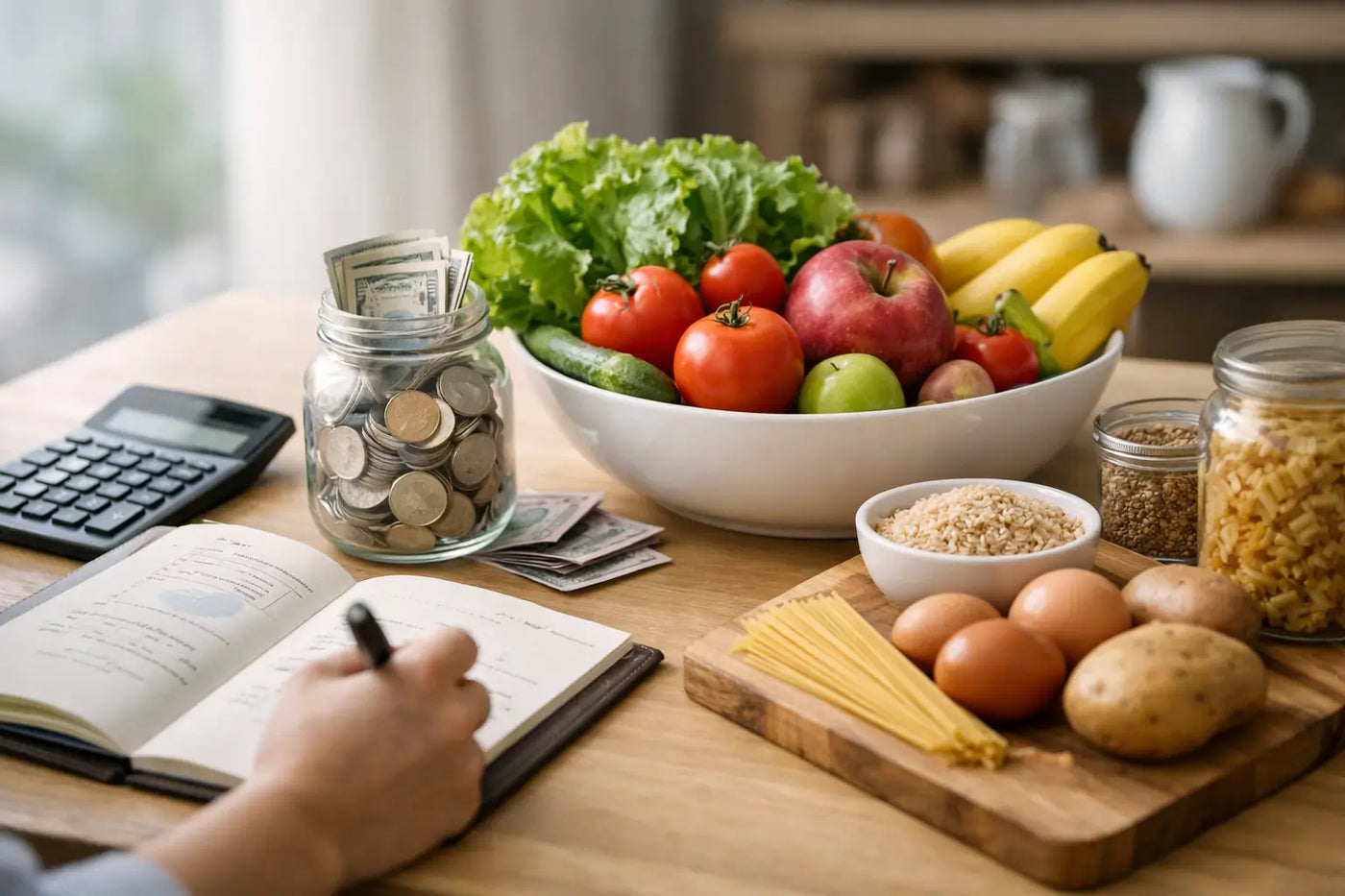
A household food budget breaks down when it lives only in your head. The total at checkout feels surprising, takeout fills busy gaps, and ingredients disappear behind other ingredients in the pantry. This guide to household food budgets gives every dollar a job before you shop, so dinner stays practical and your spending stays visible.
The goal is not to buy the cheapest food possible. It is to feed your household well, use what you buy, and make fewer last-minute decisions that cost more than planned. A budget that leaves no room for a favorite coffee, a busy-night meal, or fresh produce will not last. Build one that reflects real life.
Start with a food number you can live with
First, decide what “food” includes in your household. Some people track groceries only. Others include restaurant meals, delivery, school lunches, and convenience-store stops. Neither approach is wrong, but mixing categories makes it hard to see what needs attention.
Look at the last four to eight weeks of spending. Use bank and card transactions, grocery receipts, and delivery history. Add the categories you want your food budget to cover, then divide by the number of weeks. That is your current baseline, not a failure grade.
Next, choose a target. If your spending needs to come down, do not cut it in half because the number looks tidy. Start with a reduction you can sustain, such as 5 to 10 percent. A household spending $250 a week on groceries may aim for $230 first. Once that routine feels normal, review it again.
Your target will depend on household size, dietary needs, local prices, work schedules, and how often you cook. A family managing food allergies may spend more on specific staples. A couple with long commutes may value prepared components that prevent takeout. The right budget is a controlled trade-off, not a contest.
Give your household food budget three lanes
One weekly number is useful. Three lanes make it usable. Set aside an amount for planned groceries, a smaller amount for flexible purchases, and a reserve for the things that disrupt a normal week.
Planned groceries cover the meals and staples already on your list. Flexible spending covers a sale item, a replacement ingredient, or a snack your household genuinely uses. The reserve covers an unexpected guest, a late work night, or a week when the refrigerator repair bill leaves less room for experimentation.
Without these lanes, every unplanned purchase feels like a mistake. With them, you can make a deliberate choice. Spending $12 on rotisserie chicken may be more economical than buying ingredients for a dinner no one has time to cook, then ordering delivery anyway.
Keep the reserve modest and separate. If you do not use it, let it roll into next week or use it to restock a high-use staple. This creates margin without turning your plan into a complicated spreadsheet.
Plan meals before you build the grocery list
A grocery list is only as good as the meals behind it. Start with the week ahead: busy evenings, lunches away from home, sports practices, guests, and any food already close to its expiration date. Then choose meals that fit the actual calendar.
Use a mix of familiar meals, one flexible meal, and at least one low-effort backup. Familiar meals reduce the chance that ingredients sit unused. A flexible meal - tacos, grain bowls, pasta, soup, or stir-fry - can absorb leftover vegetables, proteins, and sauces. Backup meals protect the budget on the nights when cooking does not happen.
Serving size matters more than most budgets account for. A recipe written for four may leave too much food for two people or not enough for a family with teenagers. Scale recipes to the portions your household will eat, including planned leftovers for lunch. Buying the right quantity is often more valuable than chasing a small discount on the wrong quantity.
Plan meals in an order that uses perishables first. Cook delicate greens, berries, fish, and ripe produce early in the week. Save frozen vegetables, canned goods, sturdy roots, and pantry meals for later. This one change can reduce waste without making your menu feel restrictive.
Shop your kitchen before the store
The least expensive ingredient is the one you already own and will actually use. Before making a list, check the refrigerator, freezer, pantry, and any storage shelf where duplicates tend to collect. Note opened packages, items nearing expiration, and partial ingredients from previous recipes.
Build meals around those ingredients when it makes sense. Half a bag of rice, canned beans, a forgotten jar of salsa, and frozen peppers can become several meals. But do not force a meal your household dislikes just to clear a shelf. Waste also happens when a bargain turns into a dinner nobody wants.
Then write a list that names quantities, not just ingredients. “Chicken” invites guesswork. “Two pounds of chicken thighs for Tuesday and Thursday” is easier to buy accurately. Group the list by store section if that helps you move quickly and avoid extra browsing.
A personal price book adds another layer of control. Record the usual price and unit price of the items you buy repeatedly, such as eggs, yogurt, rice, coffee, and protein. You do not need to track every product. Track the 15 to 25 items that move through your kitchen most often. Over time, you will know whether a sale is useful or merely loud.
An offline planning tool such as LARDER can keep meal plans, pantry quantities, expiration dates, grocery lists, and your own price data in one private workspace. No account. No internet connection. No monthly fee. The useful part is not more data. It is seeing the data you already need when you plan the next meal.
Make room for convenience on purpose
Convenience is not the enemy of a household food budget. Unplanned convenience is usually the expensive part. If washed salad, frozen chopped vegetables, pre-cooked grains, or a prepared protein helps your household cook at home, include it in the plan.
Compare the purchase to the real alternative. A $6 prepared salad kit may cost more than buying individual vegetables, but it can still be a good choice if it replaces a $25 takeout lunch and gets eaten. On the other hand, buying single-serve snacks because they seem organized may cost more without solving a real problem. It depends on what your household uses consistently.
Set a small, intentional amount for restaurant meals or delivery if those are part of your routine. Pretending they will never happen often pushes them outside the budget, where they become harder to manage. Planned takeout is a choice. Panic takeout is usually a planning signal.
Use a short weekly food routine
A budget works when it becomes a repeatable household system. Give it a regular time, ideally before your main grocery trip. Thirty minutes is enough for most weeks once your meals, recipes, and staples are organized.
1. Check the calendar and choose meals that match the week’s time constraints.
2. Review perishables, pantry stock, freezer items, and anything approaching expiration.
3. Build the grocery list from the plan, then compare it with the amount left in your grocery lane.
4. After shopping, record the total and make one small adjustment for the following week if needed.
Do not rebuild the system every Sunday. Keep a short rotation of meals your household enjoys, then change one or two meals when you want variety. Repetition is not boring when it removes the most tiring decisions.
Review patterns, not single receipts
One expensive week does not mean the budget failed. A holiday, bulk purchase, birthday dinner, or pantry restock can push spending up temporarily. Look at four-week patterns instead.
Ask useful questions. Did food go bad because too much was purchased? Did a meal plan ignore a particularly busy night? Did snacks, drinks, or delivery account for more than expected? Did a bulk purchase lower future costs, or is it still taking up space unused?
The answer tells you what to change. You may need fewer ambitious recipes, a larger fresh-produce allowance, a better backup meal, or a stricter rule about buying duplicates. Small corrections are more effective than a total reset.
A good food budget should make the week quieter. You know what is for dinner. You know what to buy. You know what you already have. Start with one week, keep the plan honest, and let the routine earn its place in your household.