16 August 2026
How to Calculate Macros for Recipes at Home
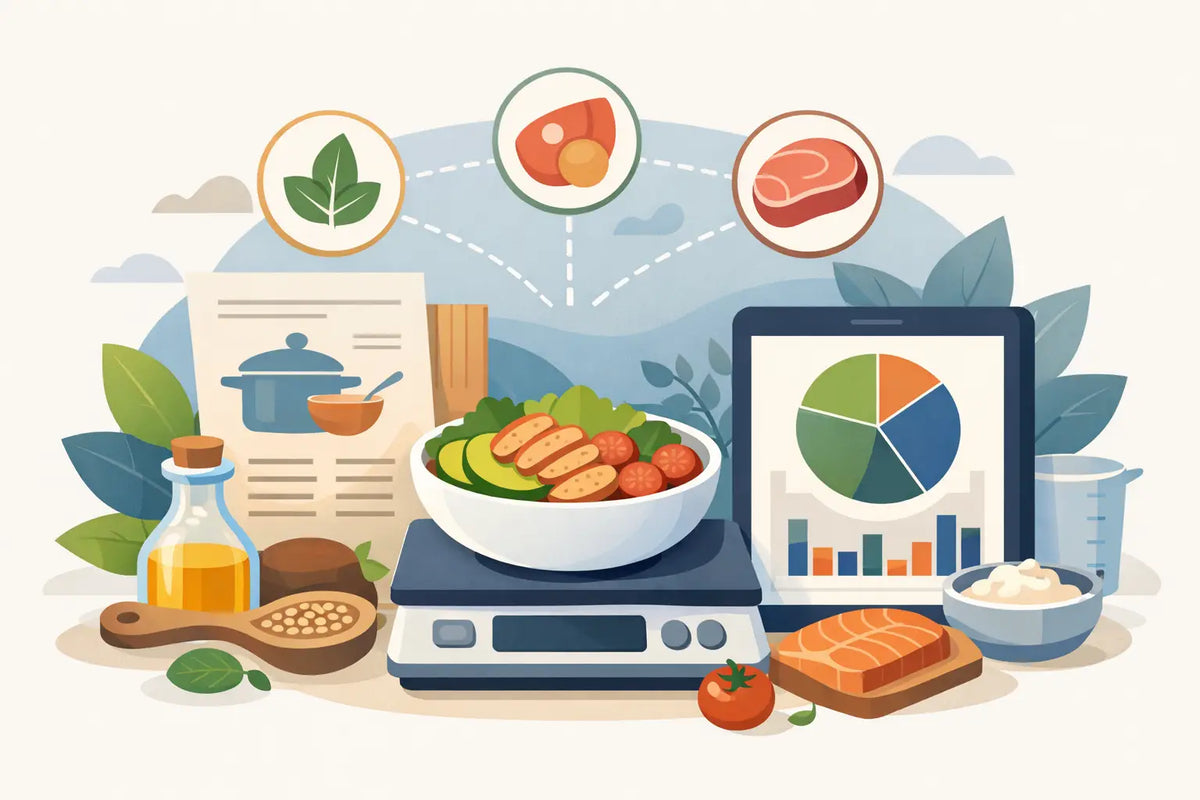
A recipe can look healthy and still be hard to track. A spoon of oil, an unmeasured handful of cheese, or a recipe labeled “serves four” can change the numbers more than expected. Learning how to calculate macros for recipes gives you a clear answer before dinner is on the table.
You do not need a complicated spreadsheet. You need accurate ingredient entries, sensible serving sizes, and one repeatable method. Once a recipe is calculated, it becomes useful every time you make it - for meal planning, grocery shopping, fitness goals, or simply knowing what your household is eating.
What “macros” means in a recipe
Macros are the nutrients that provide most of a food’s energy: protein, carbohydrates, and fat. Calories are usually tracked alongside them. Fiber, sugar, saturated fat, and sodium may matter too, depending on your goals, but they are not the core macro calculation.
For a full recipe, the process is simple: add the nutrition for every ingredient, then divide the total by the number of servings you actually serve.
A recipe with 80 grams of protein, 160 grams of carbs, and 40 grams of fat contains those totals whether it makes two portions or six. The serving count changes the result. At four servings, each portion has 20 grams of protein, 40 grams of carbs, and 10 grams of fat.
That distinction is where most recipe tracking goes wrong. The math is not difficult. The inputs are.
How to calculate macros for recipes, step by step
Start with the recipe as you really cook it, not as you intend to cook it someday. Include cooking oil, sauces, toppings, dressings, milk in the mashed potatoes, and the second tortilla if you use two. A calculation is only as useful as it is honest.
1. List every ingredient and its exact amount
Weigh ingredients when you can. A kitchen scale is more reliable than a cup measure for calorie-dense foods such as rice, oats, nut butter, cheese, oil, and trail mix. If a package says one serving is 28 grams, measuring 28 grams gives you a result that matches the label.
Volume measurements can still work for many everyday ingredients. One cup of broth or a tablespoon of soy sauce is usually close enough. But “one medium avocado” or “one large chicken breast” leaves too much room for variation. Use the weight of the edible portion when accuracy matters.
For packaged foods, use the nutrition label for the precise product in your kitchen. Brands differ. One jar of pasta sauce may have twice the sugar of another, and a higher-fat ground turkey can change a family recipe considerably.
For whole foods without a label, use a consistent nutrition reference entry. Choose an entry that matches the food state: raw, cooked, drained, frozen, canned in water, or canned in oil. Do not mix them casually.
2. Record calories, protein, carbs, and fat for each ingredient
Create four columns: calories, protein, carbohydrates, and fat. Enter the amount contributed by each ingredient, then add each column.
Suppose a chili uses one pound of lean ground beef, two cans of beans, crushed tomatoes, onion, peppers, and one tablespoon of oil. Calculate the nutrition for the complete amount of each item added to the pot. If the bean label lists values per half cup but you use three cups, multiply the listed values by six.
This is the core formula:
Recipe macro total = the sum of each ingredient’s macro amount
The same applies to calories. Do not calculate calories from macros alone when a label already supplies calories. Label rounding, fiber, sugar alcohols, and alcohol can make the standard 4-calories-per-gram for protein and carbs and 9-calories-per-gram for fat estimate differ slightly from the package total.
3. Decide what counts as a serving
A serving is not a nutrition-label concept imposed on your dinner. It is the portion people will actually eat.
If a casserole fills eight equal containers, it has eight servings. If two adults eat it for dinner and the rest becomes three lunches, it has five servings. Set the number after cooking if that gives you a more realistic answer.
For batch recipes, weighing the finished dish is especially useful. If your cooked rice bowl mixture weighs 1,800 grams and you want six equal servings, each serving is 300 grams. You can portion by weight instead of guessing with a ladle.
Use this formula:
Per-serving macros = recipe macro total ÷ number of servings
If your chili has 2,400 calories, 160 grams of protein, 240 grams of carbs, and 80 grams of fat, divided into six servings, each bowl contains 400 calories, about 27 grams of protein, 40 grams of carbs, and about 13 grams of fat.
Round for everyday use. Whole grams are practical. Precision to two decimal places creates more work without making dinner more accurate.
4. Save the finished recipe, not just the result
A one-time calculation helps for one meal. A saved recipe helps every time that meal returns to the plan.
Keep the ingredient amounts, brand-specific details where relevant, total batch nutrition, default serving count, and per-serving macros together. When you make a change - switching regular yogurt for Greek yogurt or using a different sausage - copy the recipe and update the version. That protects your reliable original.
This is where a recipe and meal-planning system earns its place. In LARDER, ingredient nutrition, serving scaling, recipes, and scheduled meals live in the same private workspace. Change a recipe quantity or number of servings, and the nutrition calculation stays connected to the food you plan and shop for. No account. No cloud dependency. No monthly fee.
The details that change the numbers
Not every food needs the same level of attention. Seasonings such as pepper, dried herbs, garlic powder, and a squeeze of lemon have small macro effects in normal amounts. Oils, butter, cheese, nuts, mayonnaise, sugar, flour, and creamy sauces do not. Measure those.
Cooking creates another common point of confusion. Meat loses water as it cooks, so four ounces of cooked chicken often contains more nutrition than four ounces of raw chicken. Neither is wrong. They are different weights at different stages. Choose a raw or cooked reference based on how you measured the ingredient and stay consistent.
Dry grains and pasta create the opposite problem. One cup of cooked pasta is not equivalent to one cup of dry pasta. If your recipe begins with dry pasta, calculate the dry weight used. Then divide the finished recipe into portions after cooking.
Drainage also matters. A can of tuna packed in water has different nutrition before and after draining. So do beans, canned fruit, and ground meat after fat is poured off. Match your nutrition entry to the food you eat, not merely the food you opened.
When exact tracking is not worth the friction
You do not need to calculate every lettuce leaf in a salad or every pinch of parsley in soup. The goal is a dependable household system, not a laboratory report.
Be more exact when a food is calorie-dense, when a recipe is repeated often, or when you are following a specific calorie or protein target. Be less exact with low-calorie vegetables, occasional meals, and recipes where the portion size naturally varies. Consistency beats occasional perfection.
The same principle applies to shared meals. If one person eats a much larger bowl, equal division may not reflect reality. Weigh the finished food, record each portion by grams, and calculate each person’s share from the batch total. For a casual weeknight stew, an equal split may be all the accuracy you need.
A quick check before you trust the result
Before saving a recipe, ask three questions. Did I include every meaningful ingredient? Does the food state match the amount I measured? Does the serving count match the portions we will eat?
If the result seems surprising, inspect the biggest contributors first. A recipe that looks high in calories is often carrying more oil, cheese, rice, or sauce than expected. A recipe that seems low in protein may be divided into more servings than you realized.
Good macro tracking should make dinner easier to decide, not turn cooking into paperwork. Build the recipe once, portion it sensibly, and let the numbers support the routine you already want: meals planned, groceries accounted for, and fewer unknowns at the table.