07 September 2026
How to Organize Recipes by Ingredients at Home
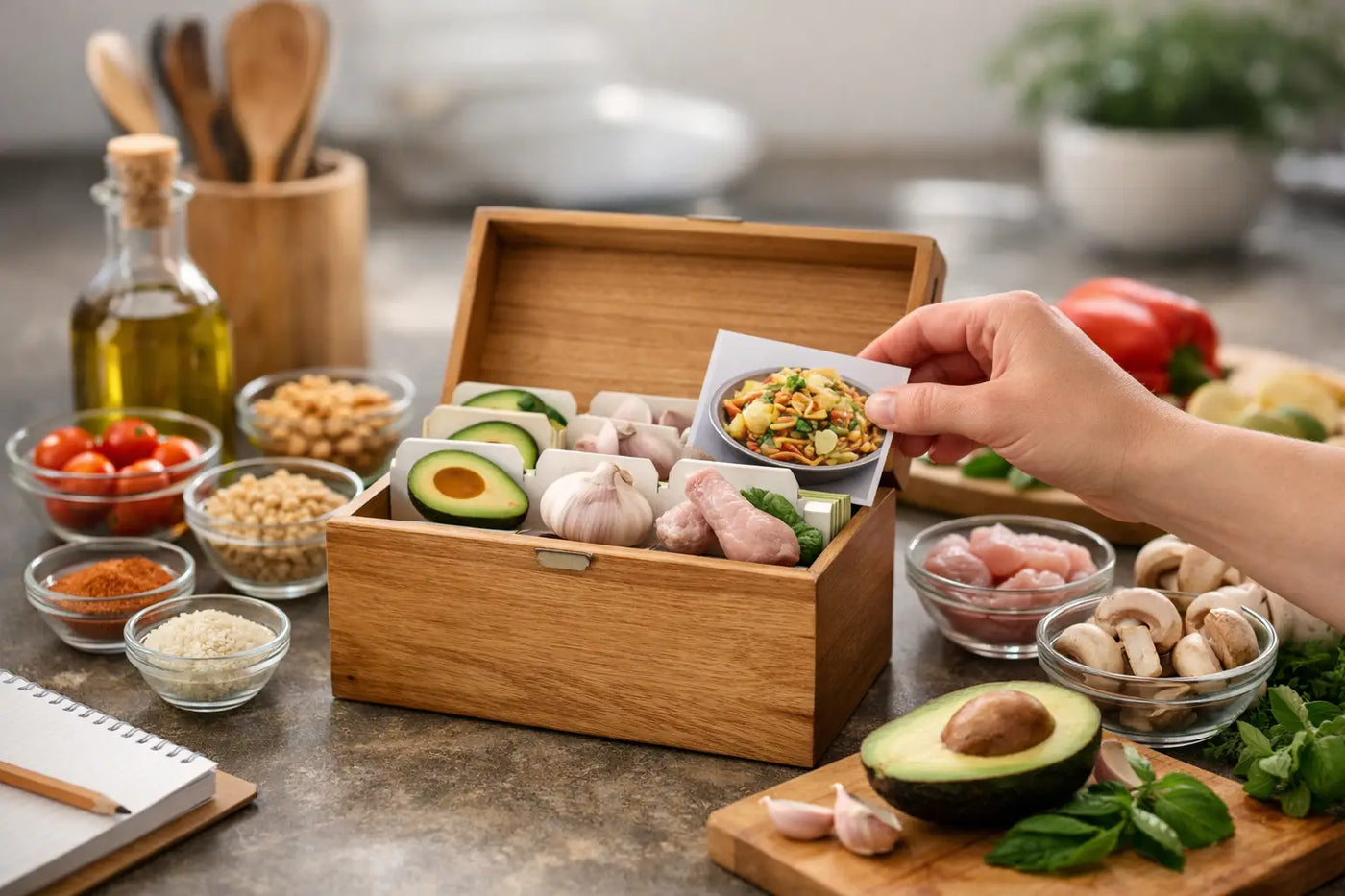
The chicken is thawed. The spinach is approaching its last good day. You have rice, two lemons, and no desire to scroll through 200 saved recipes hoping for an answer. This is the moment to organize recipes by ingredients. Not by cuisine first. Not by vague labels like “weeknight.” By the food you already have and need to use.
An ingredient-first recipe system turns the contents of your kitchen into a workable dinner plan. It reduces duplicate purchases, makes leftovers easier to use, and gives perishables a job before they become waste. Dinner stops beginning with a blank search bar. It begins with your pantry, refrigerator, and freezer.
Why organize recipes by ingredients?
Most recipe collections are built for browsing. They are sorted by course, cuisine, author, or the day you saved them. Those categories can be useful when you want inspiration. They are less useful at 5:30 p.m. when you need to use ground turkey, broccoli, and a half-full jar of pesto.
Ingredient organization answers a more practical question: what can I make from what I own?
That shift has real household benefits. You can plan meals around produce before it spoils. You can see several uses for a high-cost ingredient instead of buying it for one recipe and forgetting the rest. You can build a grocery list around gaps, not guesses. And when prices rise, you can make better use of what is already paid for.
The trade-off is that ingredient tags require some setup. A recipe with a complete ingredient list is not automatically easy to find unless the ingredient names are consistent. “Bell pepper,” “red pepper,” and “capsicum” can become three separate paths to the same food. A little standardization prevents that friction later.
Build an ingredient-first recipe system
The goal is not to create a perfect food database. The goal is to make weekly decisions easier. Start with the recipes you cook, or genuinely expect to cook, rather than importing every recipe you have ever saved.
Use one name for each staple ingredient
Choose a simple household name and stick to it. Use “chicken breast” rather than alternating between “boneless chicken,” “chicken breasts,” and “chicken breast meat.” Use “black beans” whether they are canned or cooked from dry, then add preparation details in the recipe notes if needed.
Consistency matters most for ingredients you buy often: proteins, vegetables, grains, dairy, canned goods, sauces, and freezer staples. You do not need to standardize every pinch of paprika on day one. Focus first on the ingredients that shape your grocery trip and meal choices.
Be specific when specificity changes the recipe. “Cheddar cheese” and “parmesan” should remain separate. “Onion” may be enough if yellow, white, and red onions are interchangeable in your normal cooking. Your system should match how your household shops and cooks, not how a professional test kitchen labels inventory.
Record complete ingredients, including the quiet ones
A recipe that lists only its main protein and vegetables will look convenient but fail when it is time to cook. Add oils, sauces, spices, broth, flour, and toppings when they matter. These smaller items affect whether the recipe is truly ready to make.
At the same time, separate essentials from flexible items. A bowl recipe may require rice and a protein but allow any crunchy vegetable. A soup may work with kale, spinach, or chard. Marking flexibility lets one recipe solve several inventory problems without creating multiple duplicate entries.
For each recipe, keep the serving size and ingredient quantities attached to the ingredient list. Otherwise, finding a recipe is only half the work. You still have to calculate whether your two chicken breasts feed two people or four. A system that can scale servings turns a good idea into a usable plan.
Create practical ingredient groups
Individual ingredient search is powerful, but groups make planning faster. Create a few groups that reflect your real kitchen: chicken, ground meat, canned beans, leafy greens, root vegetables, pasta, rice, eggs, and freezer vegetables.
Then add groups based on your household priorities. A fitness-focused cook may sort recipes by high-protein ingredients. A family managing allergies may need clear dairy-free, nut-free, or gluten-free flags alongside ingredient details. A budget-conscious household may want meals that rely on low-cost pantry staples.
Avoid making categories too narrow. “Chicken thighs with lemon” is not a useful group because it only describes one situation. “Chicken” and “lemons” are useful because they help you find several options. The system should reveal possibilities, not force you through more filing.
Plan from what needs to be used first
Once recipes are organized, the weekly routine becomes simple. Check the foods with the shortest life first. These are usually refrigerated produce, opened dairy, fresh herbs, thawed meat, and leftovers. Choose two or three recipes that use those ingredients as a starting point.
Next, look at what is plentiful. Maybe you bought a family pack of chicken, have three cans of beans, or found frozen vegetables pushed to the back of the freezer. Plan related meals across the week so one purchase supports more than one dinner.
For example, a package of spinach might become pasta on Monday, egg wraps on Wednesday, and a soup addition on Friday. A rotisserie chicken might cover tacos, grain bowls, and a quick chicken salad. The point is not to eat the same meal repeatedly. It is to give an ingredient a complete plan.
This is where ingredient organization beats recipe browsing. You are no longer deciding among every meal you could theoretically make. You are choosing among the meals that fit this week’s food.
Turn ingredient matches into a better grocery list
Ingredient-first planning makes grocery shopping more accurate because each planned recipe exposes its missing pieces. If you already have rice, soy sauce, and broccoli, a stir-fry may require only chicken and ginger. If you plan without checking inventory, you may buy duplicates or skip the one ingredient that makes the meal possible.
Review your pantry before finalizing the list. Count what is usable, not what you vaguely remember owning. Check expiration dates on items that move slowly, such as spices, condiments, baking supplies, and freezer foods. An ingredient that exists but is expired, nearly empty, or hidden behind other items cannot support the plan.
A useful grocery list separates three things: ingredients you need for scheduled meals, staples that are genuinely low, and optional items for future flexibility. This keeps the cart focused. It also makes it easier to see the cost of the week before you reach checkout.
If you track prices, ingredient-based planning becomes even more valuable. You can choose between two workable meals based on what is on hand, what is in season, and which missing ingredients cost less at your usual store.
Keep the system useful, not precious
Recipe organization fails when it becomes another project to maintain. Use a short weekly reset instead of a major monthly overhaul. After grocery shopping, update any key pantry quantities. After cooking, note substitutions that worked. When a recipe disappoints, remove it or adjust it. Your collection should earn its space.
A private local workspace can make this easier because recipes, meal plans, pantry items, nutrition details, and grocery lists stay together. LARDER is built around that practical loop, with local data, no account, no internet requirement, and no monthly fee. The value is not more software to manage. It is having one dependable place to make a decision and move on.
Do not wait until every recipe is entered. Start with 15 to 25 meals your household already repeats. Include breakfasts, lunches, fast dinners, and a few reliable freezer meals. That small collection is enough to solve many ordinary weeks.
When ingredient organization needs another view
Ingredients should be the primary filter when you are using up food, controlling spending, or building a grocery list. They are not the only filter that matters.
Some nights are governed by time. You may have plenty of ingredients for a great dinner but only 20 minutes to cook. Some are governed by nutrition needs, allergies, or the preferences of the people eating. Some are governed by energy. A recipe can fit the pantry and still be wrong for a night when everyone needs something easy.
The best system lets ingredients work alongside those realities. Add preparation time, dietary flags, favorite status, and nutrition information where useful. Then you can find meals that use spinach, take under 30 minutes, and meet your protein target. That is a much better question than simply asking what sounds good.
Your kitchen already contains the clues for next week’s meals. Put your recipes in a form that can see them, and the answer to dinner becomes much easier to find.