08 August 2026
When Should Pantry Items Rotate? Use This Rule
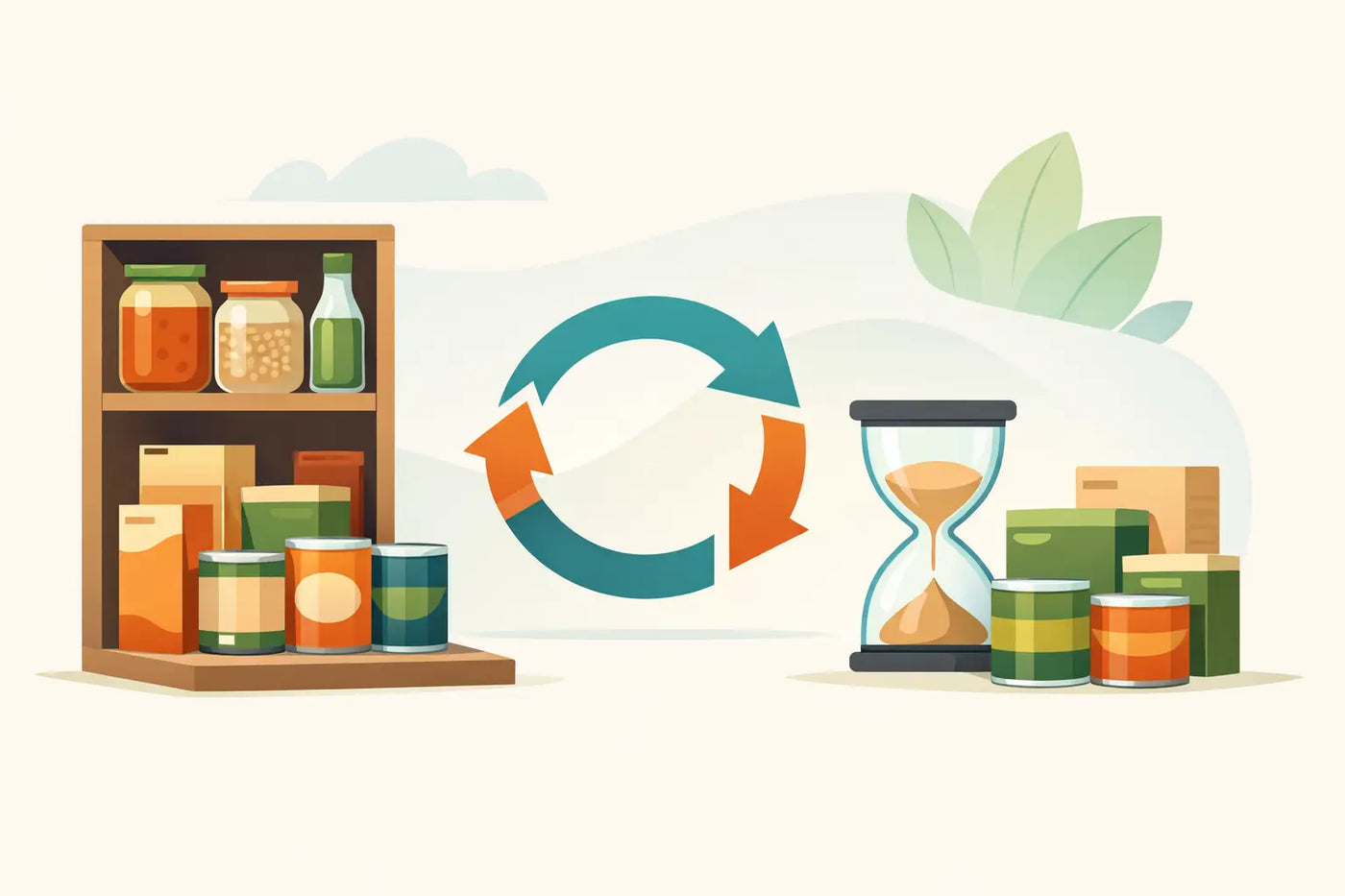
A new box of pasta goes in the cabinet. The older box disappears behind it. Three months later, you buy pasta again because you cannot see what you already own. That small pattern is how a pantry becomes expensive, cluttered, and oddly unreliable.
When should pantry items rotate? Every time groceries come home. Rotation works best as a two-minute receiving habit, not as a large cleanup project you promise to do someday. Put the newer item behind the older one, keep the earliest date at the front, and use what is already open before opening another package.
That is the rule: first in, first out. It is simple enough to repeat every week, and strong enough to reduce duplicate purchases, forgotten food, and last-minute dinner decisions.
When Should Pantry Items Rotate? Start at Restock
Rotate pantry items immediately after shopping, before bags are unpacked into random open spaces. This is the moment when you know what is new, what was already there, and what your household is likely to use soon. Waiting until the cabinet looks full turns a small task into inventory archaeology.
Set new cans, boxes, jars, and bags on the counter first. Then move existing matching items forward and place the new items behind them. If you have two cans of diced tomatoes with different dates, the earlier date belongs at the front. If a bag of rice is already open, use it before starting the sealed bag unless freshness or a recipe requirement suggests otherwise.
This is not about creating a perfect grocery store shelf. It is about making the next correct choice obvious. When the food you should use first is easiest to reach, your pantry begins to manage itself.
Use Dates Correctly, But Do Not Treat Every Date the Same
Many pantry labels use quality dates, not safety deadlines. “Best by” and “best if used by” generally describe when flavor, texture, or appearance may be at their best. They are useful rotation signals, but they do not mean a shelf-stable item becomes automatically unsafe the next day.
A “use by” date deserves more care, particularly on products that are not truly shelf-stable or have been stored outside their recommended conditions. Follow package instructions. If a product requires refrigeration after opening, move it out of the pantry and label it with the date opened.
For dry goods, canned foods, and sealed jars, let condition guide the final decision. Discard cans that are swollen, leaking, deeply rusted, or badly dented on a seam. Throw away food with signs of pests, moisture damage, mold, off odors, or broken seals. No planning system should talk you into using questionable food.
The practical goal is not to fear dates. It is to see them early enough to plan around them.
Give Open Items Their Own Priority
An unopened can of beans may stay in good condition for a long time. An open bag of flour, crackers, cereal, or nuts has a different clock. Air, humidity, heat, and repeated handling can reduce quality faster than the printed date suggests.
Keep opened goods together when possible. Clear containers can help, but they are optional. The key is visibility. If you transfer food to a container, label it with the item name, the original best-by date, and the date you opened it. A plain piece of tape and a marker are enough.
Some items deserve faster use after opening. Whole-grain flours, brown rice, nuts, seeds, and natural nut butters contain more oils and can go stale or rancid sooner than white rice, dried pasta, or canned vegetables. If your kitchen runs warm, rotate these more aggressively. It depends on the product and storage conditions, but a good default is to buy smaller quantities of foods your household uses slowly.
Build a Rotation Routine Around How You Cook
A pantry only works if it matches real meals. Buying a large quantity because it is on sale can be sensible, but only when it fits your cooking rhythm, storage space, and budget. Six jars of an ingredient you use twice a year are not savings. They are delayed waste.
Start by identifying your household staples: the ingredients used every week or two. For many homes, that includes pasta, rice, canned beans, broth, tomatoes, oats, cereal, peanut butter, cooking oil, and a few reliable sauces. Keep these in easy-to-see zones, with the oldest stock in front.
Then treat specialty ingredients differently. If you bought coconut milk for one recipe, place it where it will be noticed, not in a distant back corner with baking supplies. Add it to an upcoming meal while it is still on your mind. A pantry item does not need to be near its date to earn a place on next week’s menu.
This is where meal planning makes rotation useful rather than fussy. Instead of asking, “What should we make?” while staring at a crowded shelf, ask, “What needs to be used?” The answer narrows dinner options quickly.
A Simple Weekly Check Prevents the Big Cleanup
Restock rotation handles new groceries. A short weekly check catches what your routine misses. Do it when you plan meals or write a grocery list, ideally before shopping.
Look at the front row of each main pantry section. You are not counting every item. You are checking for foods that are open, close to their quality date, low in quantity, or easy to forget. Pull one or two into the week’s meal plan.
A useful weekly check follows four questions:
- What is already open and should be finished?
- What has the earliest date or is losing quality fastest?
- What can become a lunch, side dish, snack, or pantry dinner?
- What do we truly need to replace?
With LARDER, pantry quantities, expiration dates, recipes, and the grocery list can sit in one offline workspace. You can plan a meal around ingredients you already have, then add only the missing items to the list. No account. No internet connection. No monthly fee. The system stays in your browser, under your control.
Rotate by Category, Not by Perfection
You do not need identical containers or a label maker to rotate food well. A few basic categories are enough: canned goods, grains and pasta, baking supplies, breakfast items, snacks, sauces, and cooking oils. Grouping similar items makes the older product easier to spot and makes restocking faster.
Within each category, keep the same rule. Older in front. Newer in back. Open items visible. If a shelf is too deep to see, use a small bin, basket, or shallow tray so you can pull the category forward. The best organizer is the one that lets you see what you own without moving six other things.
Avoid overstocking shelves just because there is empty space. A little open room makes rotation possible. It also lets you notice a nearly empty staple before dinner depends on it.
Handle Bulk Purchases With a Clear Limit
Warehouse-size packages can lower the unit price, but they add a storage and tracking problem. Bulk works best for items you use consistently, can store safely, and will finish well before quality declines. Toilet paper is easy. Ten pounds of specialty flour may not be.
When you buy bulk, split it into smaller working quantities if that helps. Keep most of the supply in a cool, dry location and refill the front container or shelf space as needed. Record the purchase date or best-by date on the backstock. Otherwise, the reserve becomes invisible and you may buy the same item again.
Do not mix old and new dry goods in the same container unless you are certain the older batch is still good and will be used first. Mixing makes dating harder and can spread a pest or moisture problem through the whole supply.
The Goal Is a Pantry You Can Trust
A rotated pantry is not just neater. It makes weekday cooking less dependent on memory. You know which ingredients to use, which staples are running low, and which groceries can wait until the next trip.
Keep the routine small: rotate at restock, check the front of each shelf once a week, and plan one meal around what needs attention. A calm pantry does not require constant work. It requires a system that makes the next meal easier to choose.